HUMAN FACTORS TRAINING FOR SURGICAL TEAMS
Bringing aviation human factors into modern surgical practice
- Clinically grounded
- Evidence-informed
- Practical delivery
- Clinically grounded
- Evidence-informed
- Practical delivery
Even the Best Teams Are Still Human
Fatigue. Time pressure. Interruptions. Hierarchy. Cognitive overload. Even personalities and behaviours.
These are not personal weaknesses. They are predictable human factors present in every high-performance environment.
Aviation recognised this decades ago. Instead of asking pilots to “try harder,” the industry redesigned how teams brief, cross-check, hand over, escalate concerns, and manage workload.
Surgery operates under the same pressures.
Aeromedica helps high-stress, high-stakes teams adopt structured performance systems that improve reliability without compromising professionalism or autonomy.
For Surgical Teams That Cannot Afford Confusion in Critical Moments
Increase Safety & Consistency
Structured briefings, cross-checking, and clear escalation reduce strengthen reliability where it matters most.
Sharpen Decision-Making Under Pressure
Recognise cognitive bias, overload, and fatigue in real time, and use practical strategies to prevent small errors from compounding.
Build Stronger Team Dynamics
Encourage speaking up, role clarity, and structured debriefing while maintaining respect, accountability, and clinical authority.
Founded at the Intersection of Medicine and Aviation
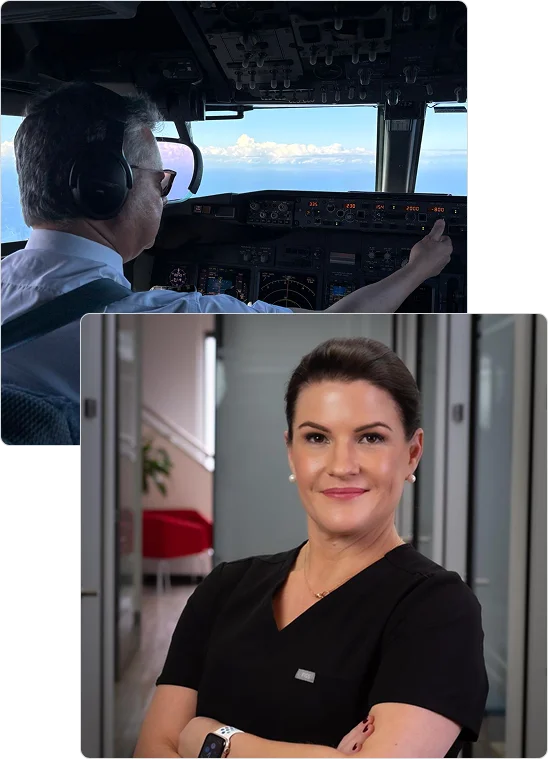
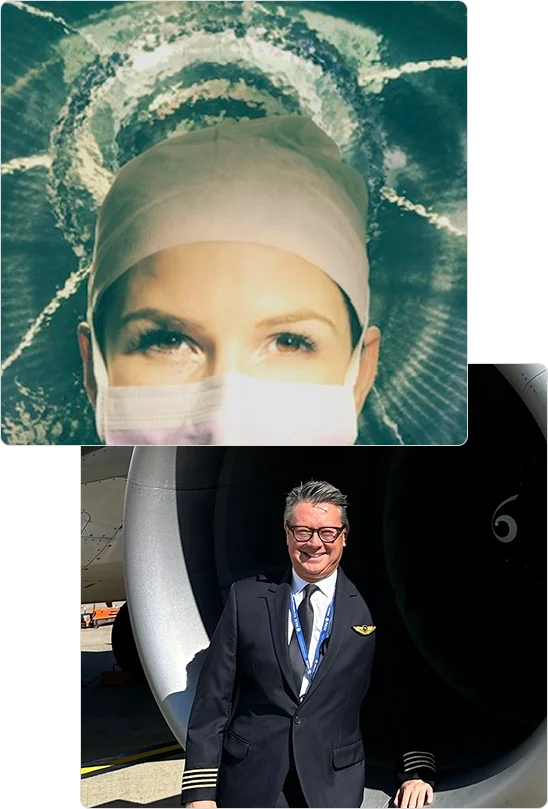
Aeromedica was established by Dr Imogen Patterson, a Urological Surgeon and helicopter pilot, and her husband Captain Chris Lin, a Qantas Captain and Human Factors Instructor.
Working in both environments, Dr Patterson recognised the same pressures at play, complexity, time constraint, and the need for precise communication.
Captain Lin brings additional experience in crew resource management and operational decision-making from his work in aviation.
With experience in both flightdeck and clinical environments, Chris and Imogen began translating their experience into practical, clinically relevant education for high-performance teams.
Human Factors Training for Surgery. Starts Here. Book Your Call.
Human Factors Training for Surgery. Starts Here.
Book Your Call.
When You Book a Call, You Can:
- Review course formats (introductory sessions, workshops, custom programs)
- Discuss suitable audiences (consultants, registrars, perioperative teams)
- Explore key topics (briefings, handovers, fatigue, hierarchy, decision traps)
- Enquire about in-house delivery or conference presentations
- Understand next steps and scheduling
"*" indicates required fields
Frequently Asked Questions
Is this just another “soft skills” workshop?
No. Aeromedica training is grounded in aviation human factors and adapted specifically for surgical environments. The focus is on structured performance systems, briefings, cross-checking, escalation, cognitive bias, not generic communication theory.
Is this relevant for experienced consultants, or primarily trainees?
Human factors affect performance at every level. In aviation, the most experienced captains are often the most disciplined in structured communication. The same applies in surgical teams.
Can sessions be customised to our specialty or department?
Yes. Workshops are adapted to surgical workflow, specialty demands, and real operating environments. Content is clinically authentic, not corporate case studies.
How is this different from standard hospital safety training?
Many safety programs focus on policy, compliance, and reporting frameworks. Aeromedica focuses on real-time human performance, how teams think, communicate, and make decisions in high-pressure moments.
Is this just another “soft skills” workshop?
No. Aeromedica training is grounded in aviation human factors and adapted specifically for surgical environments. The focus is on structured performance systems, briefings, cross-checking, escalation, cognitive bias, not generic communication theory.
Is this relevant for experienced consultants, or primarily trainees?
Human factors affect performance at every level. In aviation, the most experienced captains are often the most disciplined in structured communication. The same applies in surgical and other high-performance teams.
Can sessions be customised to our specialty or department?
Yes. Workshops are adapted to surgical workflow, specialty demands, and real operating environments. Content is clinically authentic, not corporate case studies.
How is this different from standard hospital safety training?
Many safety programs focus on policy, compliance, and reporting frameworks. Aeromedica focuses on real-time human performance, how teams think, communicate, and make decisions in high-pressure moments.

Copyright © 2026 Aeromedica Human Factors. Site by 3PM.